
Under Her Eyes x Planet of the Grapes: grape-based biomaterials for vegan bags

The collaboration between Under Her Eyes and Planet of the Grapes began with shared values around fashion, responsibility and supply chain visibility.
Founded by Silva Hrbar-Owens, Under Her Eyes was created as a vegan accessories brand with a strong interest in animal-free design. Planet of the Grapes met Silva through a Fashion Revolution accelerator programme, where both brands were connected by a deeper concern for how fashion is made, who it affects and what materials it depends on.
The collaboration offered a way to explore Canyon, one grape-based biomaterial within the Savigne by Planet of the Grapes® family, in vegan bags made in the UK. For Planet of the Grapes, it became an important test of how Canyon could behave in accessory form: structured, gathered, handled and shaped into finished objects.
A collaboration shaped by Fashion Revolution values
Fashion Revolution was born out of the Rana Plaza disaster and continues to ask urgent
questions about transparency, labour and responsibility in fashion. For Planet of the Grapes founder Sam, those questions sit close to the reason the company exists: to create materials that are more respectful of people, animals and supply chains.
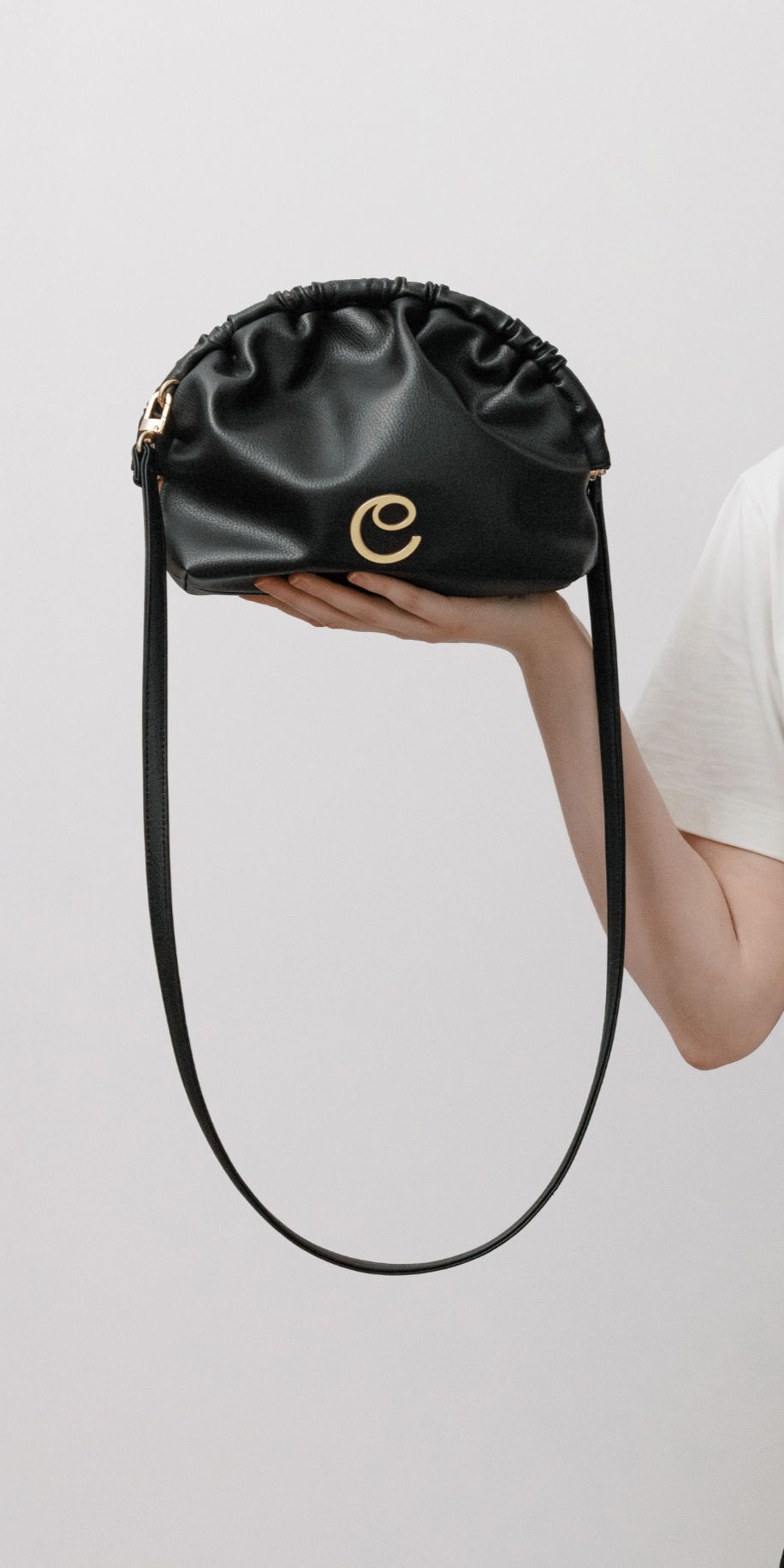
Under Her Eyes brought that same thinking into accessories. The collaboration offered a way to explore grape-based biomaterials in bags made in the UK, with production in Northampton and a closer relationship to the making process.
The result was not only a vegan bag collaboration. It was a chance to test how a grape-based material could move through a more traceable product journey.
For this collaboration, we started off with a mini structured bag in a reptile skin alternative in a purple colourway, augmented with a copper finish for the Fashion Revolution Accelerator program. We made the clutch and tote bag in Savigne by Planet of the Grapes®.
Structured bags and soft gathered forms

One of the strengths of this collaboration is that it showed more than one side of the material.
The first bag explored a smaller, more structured shape. This allowed the material to hold form, edge and proportion in a compact accessory. Later, the material was used in a softer tote with a drawstring construction.
As the drawstring pulled in, the material gathered and created volume, giving the bag a generous, tactile shape.
As Planet of the Grapes founder Samantha Mureau says:
“Silva really showed through Under Her Eyes how our materials can be used for structured and softer shapes as well.”
Canyon has a firm, structured handle in its main expression, lending itself to clean edges, controlled silhouettes and architectural forms. In alternate constructions, it can become softer, more fluid and more capable of ruching, pleating and drape. The Under Her Eyes collaboration made that duality visible through finished accessories.
Why bag-making is an important material test

Bags are demanding objects. They need to hold shape, carry weight, respond to handling and maintain a sense of finish over time.
For animal-free and bio-based materials, accessories offer an important bridge between material innovation and commercial design.
A bag is handled repeatedly, materials need to maintain stress and hold weight. It is opened, closed, carried, filled, placed down and picked up again. It asks a material to perform while remaining visible at close range.
Through Under Her Eyes, we were able to see how Canyon behaved when gathered, stitched and formed into usable objects. The collaboration gave the material a softer language without losing its sense of refinement.
Vegan bags with material depth
Under Her Eyes helped demonstrate that vegan accessories can be more than a substitution exercise. The collaboration was not about making a bag that simply looked like something else. It was about using a new material to create shape, feeling and function in its own right.
For Planet of the Grapes, it remains an important example of how grape-based biomaterials can work within accessories, especially for designers seeking animal-free materials with story, structure and softness.
Canyon brings that balance clearly: tactile enough to be felt, structured enough to hold form, and expressive enough to become part of the object’s identity.
Moving biomaterials forward
Interested in exploring grape-derived biomaterials for applications in fashion, accessories, interiors, mobility or luxury packaging?
Discover the Planet of the Grapes Material Library or get in touch to discuss sampling, applications and collaborations.


